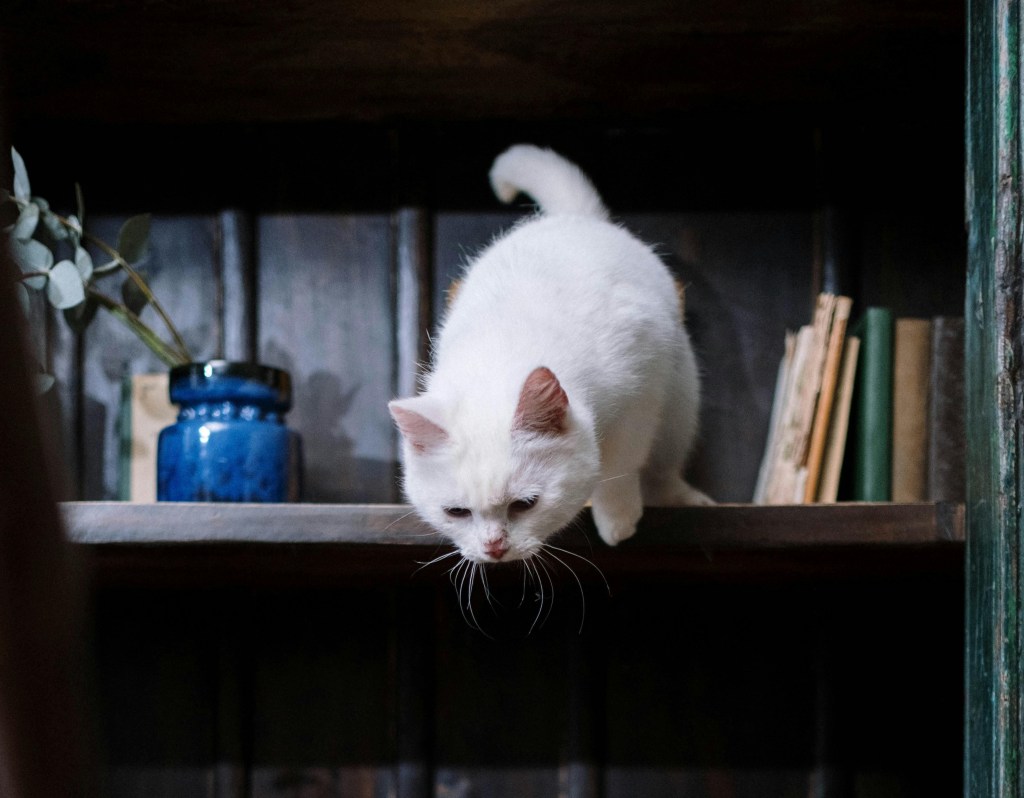
Cats have earned a legendary reputation for landing gracefully on their feet, no matter how high they fall. This has inspired countless cartoons, movies, and memes. But how much of this is scientific fact? Can cats truly defy gravity, or is it just clever evolution and biology at work?
Understanding why cats can land on their feet requires a look at their anatomy, reflexes, and the limits of their famous agility.
The Righting Reflex: Nature’s Safety Mechanism
The ability of a cat to twist its body in mid-air and land on its feet is known as the righting reflex. Kittens begin to develop this reflex at about 3 weeks old, and it is usually perfected by 6–7 weeks of age.
The righting reflex allows a cat to orient its body during a fall so that its feet face downward. To do this, cats use their highly flexible spine and lack of a rigid collarbone, which enables their front and back halves to rotate independently. This flexibility, combined with strong muscles and excellent balance, allows them to twist mid-fall without injuring themselves.
Interestingly, cats do not rely on falling from great heights to activate this reflex. Even a short fall triggers their body to adjust instinctively, which is why cats are often able to escape minor accidents relatively unscathed.
Why Cats Land So Gracefully
Several factors contribute to a cat’s seemingly magical ability to land on its feet:
- Flexible Spine: A cat’s spine is incredibly flexible, allowing them to bend and twist in ways that humans cannot. This flexibility is critical for mid-air adjustments.
- Low Body Weight and Small Size: Cats’ relatively low mass reduces the force of impact when they land, helping them survive falls that would seriously injure larger animals.
- Limbs as Shock Absorbers: Cats naturally spread their legs and bend their knees upon landing, absorbing impact forces and minimizing injury.
- Tail for Balance: While not essential for the righting reflex, a cat’s tail helps stabilize and fine-tune orientation mid-air.
The combination of these physical traits is what allows cats to perform their remarkable mid-air gymnastics. However, even with these adaptations, there are limits to how much a cat can withstand.
How High Is Safe?
Despite the myth of the “cat always lands on its feet,” there are limits. Falling from extreme heights can still be dangerous or fatal. Studies of urban cats that fall from buildings show interesting trends:
- Cats falling from two to six stories may survive, sometimes with minor injuries
- Surprisingly, cats falling from higher than six stories sometimes suffer fewer injuries than those falling from moderate heights. This is thought to be because cats reach terminal velocity, relax, and spread their limbs, reducing impact force
This phenomenon is sometimes called high-rise syndrome, and while it highlights a cat’s impressive survival skills, it’s important to note that injuries, including broken bones, internal injuries, or death, are still possible.
Indoor cats generally face fewer falls than outdoor cats, but accidents can still occur from windows, balconies, or furniture. Preventing falls with screens or safe climbing spaces is always better than relying on instinct alone.
While the righting reflex is remarkable, it is not foolproof. Factors that affect a cat’s ability to land safely include:
- Height: Falls from very low surfaces don’t always allow enough time to right themselves. Cats can hit awkwardly and injure a paw or limb.
- Obstacles: Narrow ledges, cluttered spaces, or confined areas can interfere with a cat’s rotation.
- Age or Health Issues: Elderly cats, kittens underdeveloped in muscle strength, or cats with spinal problems may not right themselves effectively.
- Surface: Hard, slippery, or uneven surfaces can increase the risk of injury on landing.
Understanding these limits is important for cat owners. No cat is immune to injury from falls.
Tips to Keep Your Cat Safe From Falls
While cats have natural survival skills, it’s always best to minimize risk:
- Window Screens: Keep windows securely screened, especially in high-rise apartments.
- Safe Climbing Spaces: Offer cat trees or shelving designed for cats to climb safely.
- Avoid Dangerous Ledges: Keep furniture away from open balconies or high ledges.
- Supervised Outdoor Access: If your cat goes outside, make sure balconies or porches are secure.
Taking preventive measures ensures that your cat’s remarkable reflexes are a bonus rather than a necessity.
Final Thoughts
Cats do have an extraordinary ability to right themselves mid-air, thanks to the righting reflex, a flexible spine, and strong muscles. This ability allows many cats to survive falls that would seriously injure other animals. However, the myth that cats are invincible or can survive any fall is false. There are limits, and injuries are still possible, especially for kittens, elderly cats, or cats with health issues.
Appreciating this incredible skill should go hand in hand with taking precautions. Ensuring safe climbing spaces, secure windows, and attentive supervision allows cats to explore their environment without unnecessary risk. After all, their natural agility is amazing—but it’s not a substitute for safety.
 Life in Paws