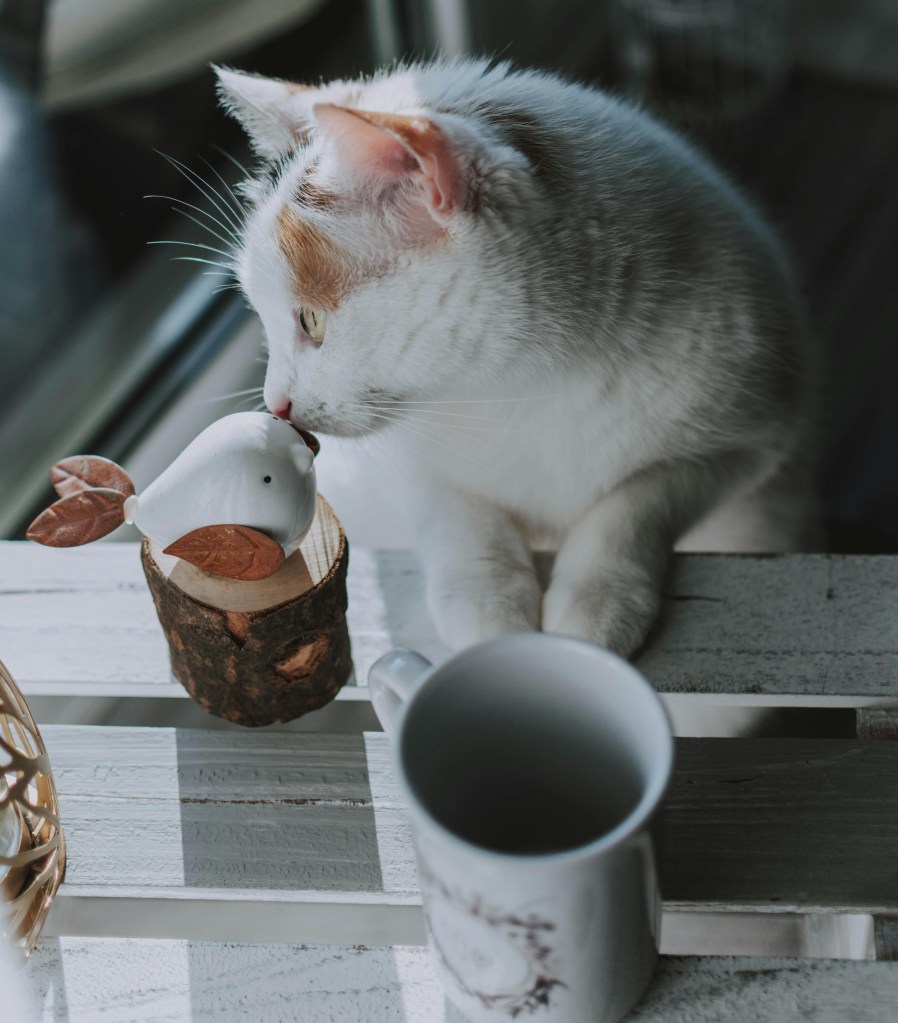
If you live with a cat, you’ve probably experienced it:
You place your phone, a pen, or a glass safely on the table… and your cat stares at it, slowly extends a paw, and pushes it off — while maintaining full eye contact.
It can feel petty. Or vengeful. Or like your cat is conducting a social experiment at your expense.
But the truth is, cats don’t knock things off tables to be jerks.
There are very real biological, psychological, and environmental reasons behind this behavior — and understanding them can actually improve your relationship with your cat.
Let’s break down what’s really going on.
Cats Are Natural Hunters, Even Indoors
At their core, cats are predators. No matter how pampered or relaxed they seem, they still carry the instincts of hunters who rely on movement, touch, and reaction to understand their environment.
When a cat bats an object with their paw, they’re essentially testing it. Does it move? Does it respond? Does it make a sound? Knocking something off a surface provides instant feedback, which is deeply satisfying to a cat’s brain.
From a cat’s perspective, pushing objects off tables is not destructive—it’s investigative. That falling pen or phone mimics the way prey might move when touched, activating instinctive behavior that has nothing to do with human rules or possessions.
Curiosity and Cause-and-Effect Play a Huge Role
Cats are intensely curious animals. They explore the world through their paws in much the same way humans use their hands. A small object near the edge of a table presents a perfect opportunity to experiment.
When your cat pushes something and it falls, they’re learning about cause and effect. This kind of interaction is mentally stimulating, especially for indoor cats whose environments don’t change much day to day.
The sound of an object hitting the floor, the movement it creates, and the visual satisfaction of watching it fall all add to the experience. For your cat, this is a mini science experiment—and one they can repeat whenever they want.
Why Cats Knock Things Off Tables for Attention
One of the most overlooked reasons cats knock things off tables is that it reliably gets a reaction from humans.
Cats are excellent observers. They quickly learn which behaviors lead to attention. If every time your cat pushes something off the table you look up, speak, or get up, your cat makes a clear connection: this works.
Even negative attention can reinforce the behavior. From a cat’s point of view, any response is better than none. This is why cats often knock things over when you’re busy, on your phone, or focused on work.
It’s not manipulation—it’s learned communication.
Boredom Is a Common Trigger, Especially for Indoor Cats
Indoor cats, while safe and loved, can become bored without enough stimulation. When a cat doesn’t have sufficient outlets for physical and mental energy, they often create their own entertainment.
Knocking objects off tables becomes a form of self-directed play. This behavior is especially common in younger cats, highly intelligent cats, or cats who don’t get regular interactive play sessions.
If your cat knocks things over frequently at certain times of day, boredom is a strong possibility. The behavior may be telling you that your cat needs more engagement, novelty, or play.
Cats Learn Routines Faster Than We Realize
Cats are excellent at recognizing patterns. If knocking something off a table consistently leads to food, playtime, or your attention, it can quickly become part of your cat’s daily routine.
This explains why some cats push objects off surfaces right before meals, during work calls, or at bedtime. From their perspective, they’re not misbehaving—they’re following a sequence that has worked before.
Over time, the behavior becomes habitual rather than exploratory.
Do Cats Knock Things Over Out of Spite?
No. Cats do not knock things off tables out of spite, revenge, or passive aggression.
Cats don’t think in terms of punishment or moral judgment. They live in the moment and respond to instincts, curiosity, and learned outcomes. Assigning human emotions to this behavior can make it more frustrating than it needs to be.
Understanding that your cat isn’t being malicious helps shift the focus from punishment to problem-solving.
How to Stop Cats from Knocking Things Off Tables (Humanely)
Punishing a cat for this behavior doesn’t work and can damage trust. Instead, addressing the underlying causes is far more effective.
Increasing interactive play is one of the best solutions. Short daily play sessions that mimic hunting—stalking, chasing, and pouncing—help satisfy instinctual needs. A tired cat is far less likely to entertain themselves by pushing objects off tables.
Environmental enrichment also matters. Providing vertical spaces like cat trees, shelves, or window perches gives cats appropriate surfaces to explore. When cats feel they have their own territory, they’re less inclined to patrol yours.
Managing the environment helps too. Cats are drawn to small, lightweight objects near edges, so minimizing temptation while you work on enrichment can reduce incidents. Offering safe toys or items your cat is allowed to bat around gives them an appropriate outlet for the same urge.
Finally, be mindful of your reactions. If attention is the reward, try to avoid reinforcing the behavior with immediate responses. Redirect calmly once things have settled.
When Knocking Things Over May Signal a Bigger Issue
Occasional object-pushing is normal cat behavior. However, if your cat suddenly starts knocking things over excessively, or if the behavior appears alongside aggression, vocalization, restlessness, or litter box changes, it may indicate stress or discomfort.
In those cases, consulting a veterinarian or feline behaviorist can help rule out underlying issues.
The Real Reason Cats Knock Things Off Tables
When cats knock things off tables, they’re not being naughty or vindictive. They’re acting on instinct, curiosity, boredom, or learned communication patterns.
Once you understand why cats push things off surfaces, the behavior becomes less mysterious—and often less frustrating. While it may not save every object in your home, it does offer insight into how your cat experiences the world.
And sometimes, that slow, deliberate paw is just your cat being exactly what they are: curious, intelligent, and very, very feline.
 Life in Paws