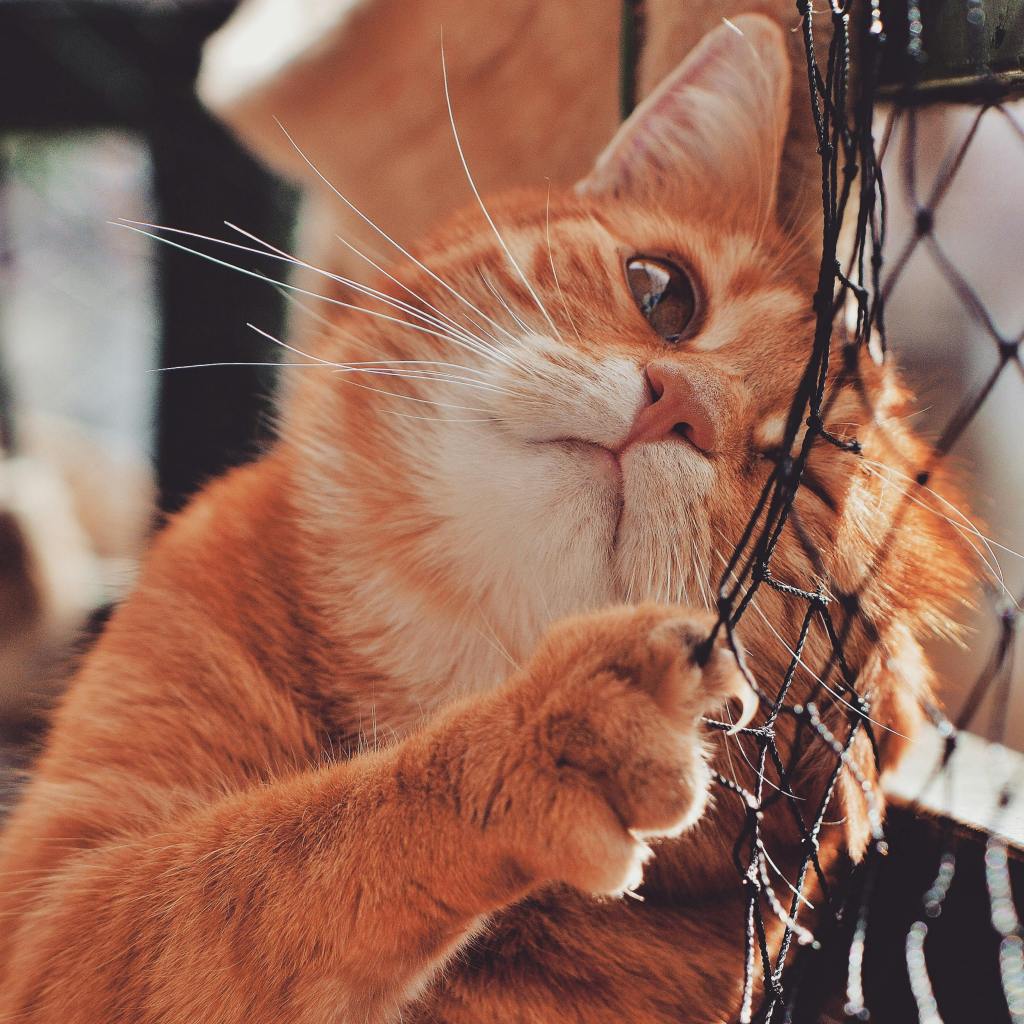
Whiskers. Those long, stiff hairs, scientifically known as vibrissae, are much more than just facial adornments. They play a crucial role in a cat’s ability to navigate its environment, detect prey, and even communicate.
The Purpose of Whiskers
Cat whiskers are highly specialized sensory tools that provide vital information about the world around them. Unlike regular fur, whiskers are deeply embedded in the cat’s skin, where they connect to a rich supply of nerves and blood vessels. This connection allows whiskers to function as an extension of the cat’s sense of touch, enabling them to detect even the slightest changes in their surroundings.
- Spatial Awareness: Whiskers help cats gauge the size of openings and spaces. The length of a cat’s whiskers typically matches the width of its body, allowing the cat to determine whether it can fit through tight spaces. This ability is especially useful for wild cats hunting in dense underbrush or navigating through narrow passages.
- Balance and Orientation: Whiskers also contribute to a cat’s incredible sense of balance. When a cat moves, its whiskers detect shifts in air currents, which helps the cat maintain orientation and stability, particularly in low-light conditions or when jumping from heights.
- Hunting and Prey Detection: Cats are natural predators, and their whiskers play a significant role in hunting. When a cat catches prey, the whiskers on its face and above its eyes detect the prey’s movements, even in complete darkness. This allows the cat to deliver precise bites to immobilize its prey quickly.
- Communication: Whiskers can also express a cat’s mood. When a cat is relaxed, its whiskers will be slightly spread and at rest. However, when a cat feels threatened or curious, its whiskers will point forward, indicating heightened alertness. Conversely, if a cat is scared or angry, its whiskers may flatten against its face.
What Are Cat Whiskers Made Of?
Whiskers are made of keratin, the same protein that makes up human hair and nails. However, whiskers are thicker, stiffer, and more deeply rooted in the cat’s skin than regular fur. Each whisker is connected to a follicle that is densely packed with nerve endings, making them highly sensitive to even the slightest vibrations.
The average house cat has around 24 whiskers on its muzzle, arranged in four rows on each side. In addition to the whiskers on their faces, cats also have shorter whiskers above their eyes, on their chins, and on the backs of their forelegs. These additional whiskers provide extra sensory input, further enhancing the cat’s ability to detect its environment.
The Evolutionary History of Whiskers
Whiskers are not unique to cats; they are found in many mammals, including dogs, rodents, and even some marine animals like seals. The evolutionary origin of whiskers dates back to early mammalian ancestors, who likely used these specialized hairs for survival in a world where acute sensory perception was crucial.
For cats, whiskers have evolved to become a key adaptation that aids in hunting, navigation, and social interaction. In wild cats, such as lions and tigers, whiskers are even longer and thicker, allowing them to hunt effectively in their respective environments. The presence of whiskers across different cat species suggests that this trait has been highly conserved throughout their evolutionary history, underscoring its importance for survival.
Other Facts About Cat Whiskers
- Never Trim a Cat’s Whiskers: Cutting a cat’s whiskers can disorient and stress them. Without their whiskers, cats lose their ability to gauge their surroundings accurately, which can lead to confusion and anxiety.
- Whisker Fatigue: Cats can experience something called “whisker fatigue,” where their whiskers become overstimulated from constant contact with objects like food bowls. This can cause discomfort and stress, leading some cats to eat less. Using shallow food bowls can help prevent this issue.
- Whiskers and Aging: As cats age, their whiskers may turn gray, just like human hair. This is a normal part of the aging process and does not affect their sensory capabilities.
- Whisker Loss and Regrowth: Cats naturally shed their whiskers, but unlike regular fur, whiskers take longer to grow back. During the regrowth period, cats may be slightly less coordinated, but they quickly adapt.
Cat whiskers are remarkable sensory tools that have evolved over millions of years to help cats survive and thrive. From detecting prey to navigating their environment, whiskers are an essential part of what makes cats the incredible creatures they are. Share this article if you found these whisker facts interesting!
 Life in Paws