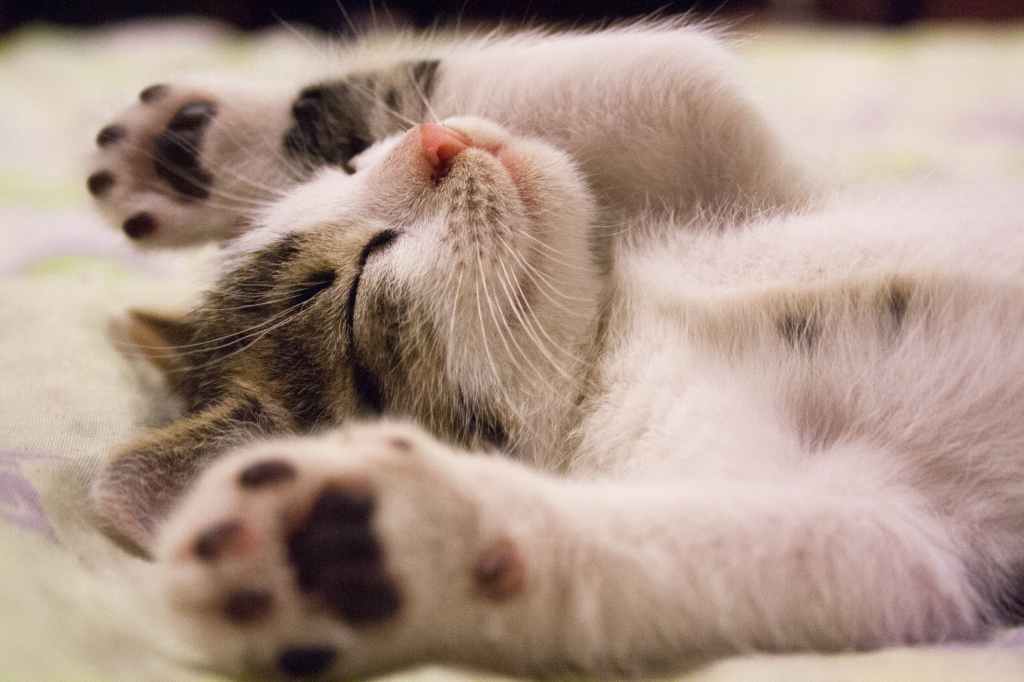
Cat owners are no strangers to the sight of their feline housemates twitching, jerking, and seemingly chasing invisible prey while in the midst of a deep slumber. While it might appear peculiar, this behavior is a normal aspect of a cat’s sleep cycle.
Your Kitty’s Sleep Cycle:
Similar to humans, cats undergo various stages of sleep. The two main phases are rapid eye movement (REM) sleep and non-rapid eye movement (NREM) sleep. During REM sleep, the brain is highly active, similar to when humans dream. This phase is where most of the twitching, paw movements, and vocalizations occur.
Hunting Instincts in Dreams:
Cats’ hunting instincts are deeply ingrained. Their twitching and movements during sleep often mimic behaviors associated with hunting, such as pouncing, stalking, or chasing prey. It’s believed that these dream sequences are connected to their experiences during wakefulness. As natural predators, cats might be rehearsing hunting strategies or reliving past hunting triumphs while they slumber.
Brain Activity and Muscle Response:
During REM sleep, a cat’s brain is active, firing signals to various muscle groups. While their bodies are typically in a state of muscle relaxation to prevent acting out dreams, some muscle groups might still respond to these signals. Hence, you’ll observe twitching in their paws, tail, whiskers, or even their entire body as they react to dream-induced stimuli.
Maintaining Health and Well-being:
Twitching during sleep is considered a healthy and necessary part of a cat’s rest. It’s a sign that their brain is functioning normally, processing information, and perhaps even contributing to their mental and physical well-being. Regular sleep, including REM sleep, is crucial for a cat’s overall health, contributing to memory consolidation and emotional regulation.
Age and Sleep Patterns:
Interestingly, younger cats and kittens tend to exhibit more pronounced twitching and movements during sleep. This behavior might be more frequent and intense in younger cats as their brains are more active and they’re experiencing a lot of new stimuli, which can translate into vivid dreams.
Feline Dreams:
Witnessing your cat twitch and move during sleep offers a fascinating glimpse into their inner world. It’s a reminder of their wild instincts, their active minds, and their unique way of processing experiences, all while nestled in the comfort of their dream-filled slumber.
The sight of your cat twitching in its sleep is an adorable window into their natural behaviors and instincts.
 Life in Paws