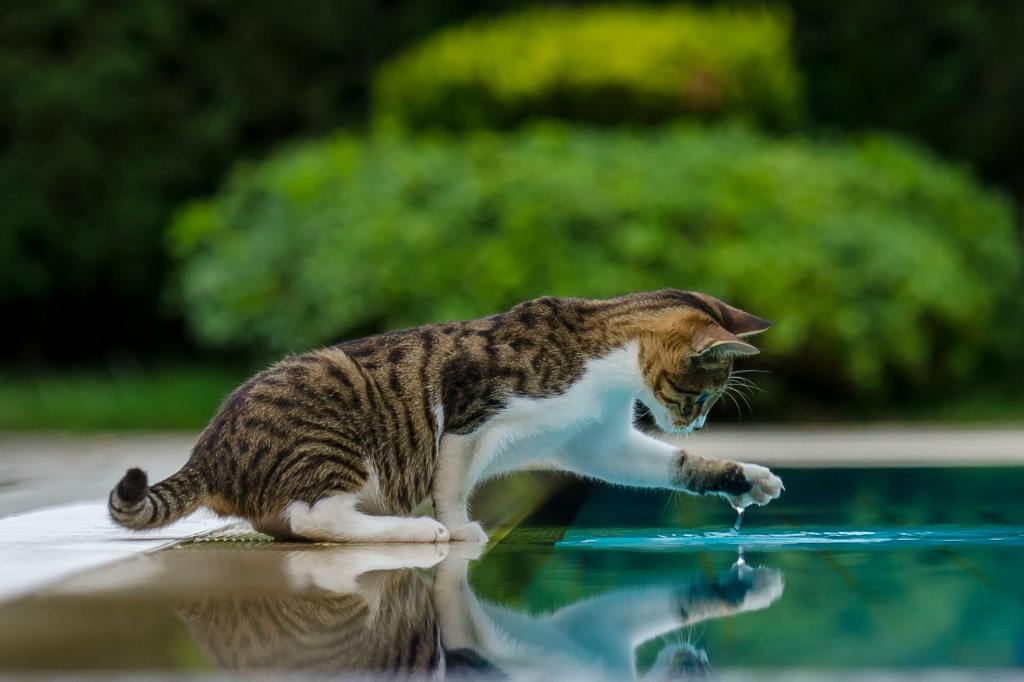
Have you ever wondered how cats manage to squeeze into tiny spaces? It’s a phenomenon that has puzzled many a cat owner, with some even joking that cats must be liquid. But what’s the real reason behind their remarkable flexibility?
The Marvels of Felid Flexibility
Cats possess a unique combination of physical attributes that enable them to perform acrobatic feats. Their skeletal structure, comprising numerous small bones and a highly developed muscular system, allows them to twist, contort, and compress their bodies with ease.
Phenomenal Fluidity (Or Is It?)
The concept of cats being liquid stems from their ability to flow through narrow gaps and occupy odd-shaped containers with surprising ease. However, this “fluidity” is merely an illusion created by the cat’s ability to adjust its shape to match the available space.
Adaptations for Stealth and Survival
Cats’ agility and flexibility serve as essential survival mechanisms. Their ability to move silently and stalk prey undetected is crucial for successful hunting. Additionally, their adaptability allows them to escape potential threats by quickly finding refuge in hard-to-reach places.
The Role of the Nervous System
A cat’s central nervous system plays a vital role in its exceptional coordination and balance. The fluid-filled canals in their inner ear contribute to their remarkable sense of balance and orientation. This explains why cats can confidently jump from heights without losing their footing upon landing.
Defying the Myth
So, are cats really liquid? The answer is a resounding no. Cats are terrestrial animals with distinct physical and physiological characteristics, perfectly adapted to their environment. Their remarkable flexibility is a testament to their evolutionary brilliance, not any liquid-like properties.
 Life in Paws